
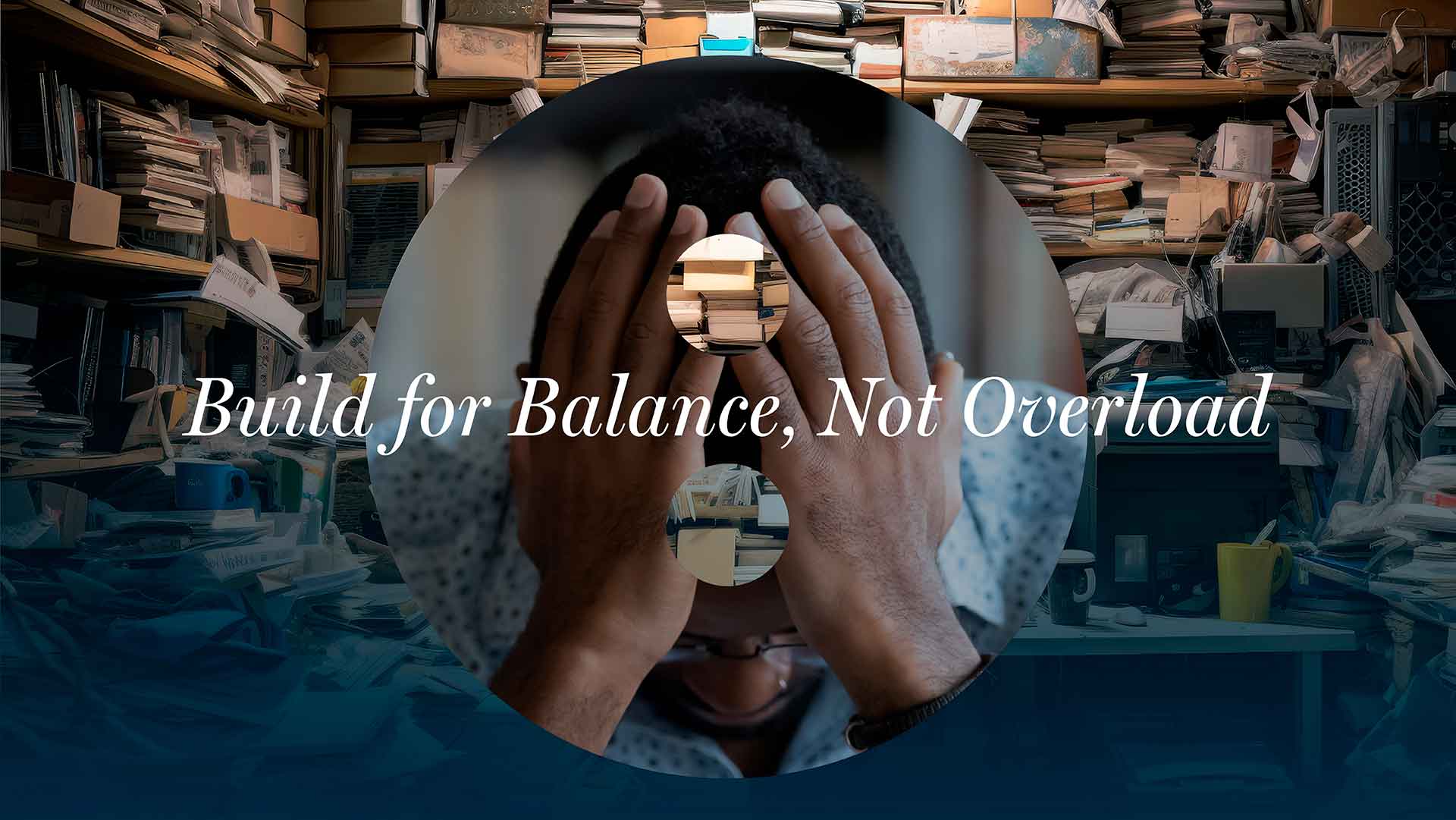
Why Work Breakdown Isn’t Effort—It’s Design
Most teams hit capacity strain not because something breaks at the individual level, but because their systems were not built to absorb growth. More clients, more channels, more urgent requests, and suddenly the model that worked at one size starts buckling at another. We’ve seen it, and it’s exactly why we’ve invested so deliberately in how we structure, resource, and run our project management work at Frankel.
The competitive pressure in marketing services is real. Clients expect speed, agility, and responsiveness as table stakes. But speed without structure can become a liability. The agencies that scale well aren’t the ones pushing their teams hardest. They’re the ones who have built the systems to make “yes” sustainable.
Why Overload Becomes Structural
Overload doesn’t come in one particular moment. It builds quietly through a few consistent patterns:
- More types of work, not just more volume. Teams that handle strategy, creative, paid media, organic social, email, reporting, and client communication, all layered on top of each other, and without specialist knowledge, can lead to scope falter.
- Fragmented workflows across tools and channels. Managing multiple platforms (ads, social, email, analytics) with constant context switching, logins, and data reconciliation can hamper focused execution.
- Addition without subtraction. Client requests, new tools, and internal initiatives keep stacking up, but priorities rarely reset.
- Client expectations for constant responsiveness. Teams are being measured by how quickly they can pivot, test, and deliver, which can place pressure on constant turnaround.
The result is a state of strain where teams are technically delivering but quietly running out of room to do their best work. Quality slips in small ways. Strategic nuance gives way to speed. People stay heads-down because raising a concern feels like slowing things down.
We’ve seen these patterns enough to design around them. Our operating model protects against structural overload by balancing workload types, integrating workflows to reduce friction, and maintaining capacity thresholds that allow teams room to think strategically.
We believe the agencies that will continue to earn client trust are the ones that protect their team’s ability to deliver sustained excellence.
Where Project Management Can Create Focus
The moment a team loses visibility into what’s actually in motion is the moment quality can start slipping quietly in the background. The answer is to create focus.
At Frankel, that focus is built into how work flows across the organization. Because we operate through specialized departments—research, creative, digital, account management, and leadership—we’re able to apply the right expertise at the right moment, rather than stretching individuals across too many competing demands. That structure allows us to stay flexible and streamline the best workflow practices.
Start with Clear, Visible Priorities
Prioritization only works if it’s visible and actively managed. Inside our project management system, every project, timeline, and allocation is mapped across teams, giving us a real-time view of what’s in motion and where pressure is building.
When new work comes in, we don’t default to “fit it in.” We assess current commitments across departments, evaluate impact, and make an explicit decision: do we reallocate resources, adjust timelines, or shift sequencing? That decision is then clearly communicated across both internal teams and the client.
This is what keeps priorities from becoming theoretical. Tradeoffs are made in the open, not absorbed silently by the team.
Actively Manage Works-in-Progress
One of the biggest drivers of capacity strain is not the volume of work, but how much of it is moving at once. When everything is active, nothing moves efficiently.
Because we have visibility into hours, timelines, and team allocation, we can control how many projects are truly in motion at any given time. Not every project is pushed forward at full speed simultaneously. Some are intentionally sequenced, and others are advanced in phases based on where the right expertise is available.
For example, if a mid-week urgent request comes in from a client, we don’t overload a team that’s already at capacity. Instead, we look across departments to identify where flexibility exists, shift work accordingly, or reset expectations on timing. The goal is to maintain momentum without creating downstream quality issues or team burnout.
Define Decision Ownership
Another important focus point happens through stronger decision rights. When a team receives new requests, who decides where it enters the queue? Who can renegotiate timing? Within our structure, account management, project management, and leadership each play a role in evaluating incoming work. That clarity allows us to quickly determine whether a request moves forward, gets rescheduled, or requires a broader reprioritization.
Because those decision rights are defined, we avoid the common trap of work entering the system without scrutiny. Every new request is weighed against current capacity and existing commitments, ensuring that adding work doesn’t quietly compromise what’s already underway.
The Effect of Choosing Impact Over Activity
One of the biggest traps in overloaded organizations is confusing activity with progress. A team can be very busy and still fail to move the business forward in a meaningful way. That is why leaders need to shift the conversation from output to impact.
Instead of asking, “How much can we get done?” a better question is, “Which work will create the most value?” That shift encourages leaders to evaluate projects based on contribution, not just visibility. It also makes it easier to defend hard trade-offs when capacity is limited.
That distinction between activity and impact is something we think about deliberately at Frankel, not just in how we talk about work but in how we manage it.
How We Manage Capacity in Practice at Frankel
The way we stay nimble isn’t by avoiding capacity strain. It’s by making it visible and actively managing it before it becomes a problem.
- Balancing demand against available capacity. We’re constantly balancing demand and availability across teams—not just at the project level, but holistically. We can see where things are getting tight before they break, which means we’re making decisions proactively instead of reactively.
- Work gets prioritized based on a mix of urgency, client impact, and effort rather than what simply came in first. That framework is what allows us to make smarter tradeoffs when things get busy, rather than defaulting to the most recent request.
- We build flexibility into the system intentionally. Whether that’s through shared resources, cross-functional support, or adjusting timelines early when needed, the goal is to have room to respond without scrambling.
- Nothing sits in a vacuum. Because project management, creative, and client teams are in ongoing communication, adaptation happens quickly. When priorities shift, we can, too, and keep everyone oriented around what matters most.
Choosing impact over activity means designing work with intent. Prioritizing high-value efforts across a dedicated timeline concentrates resources where they matter most, producing more meaningful outcomes than distributing effort across too many smaller initiatives that lack sufficient support to fully deliver. With a dedicated system in place, you can make intentional decisions instead of reactive ones.
Build a System That Can Flex Without Breaking
Ultimately, capacity management isn’t about limiting work. It’s about building a system that can absorb change without sacrificing quality. This is a scalable model for productivity. Sustainable operations are those that protect capacity, set priorities clearly, and make tradeoffs early. They understand that sustainable performance depends on pacing.
Specialized teams, centralized visibility, and structured decision-making matter, too. At Frankel, we’re able to move quickly when needed because of this transparency. Urgent requests still get handled. Priorities still shift. But they do so within a system designed to support those changes.
Frankel’s Operating Principles for Sustainable Execution
You can’t manage capacity strain on instinct alone, especially when everything feels urgent. What helps is having a clear set of principles to rely on. We rely on a defined set of principles to guide how work flows through the system, especially when demand is high.
- Ruthlessly prioritize.
- Align work to measurable impact.
- Protect team capacity as a strategic asset.
- Reframe discipline, not hustle, as the competitive advantage.
- Scale a project management framework that works.
Better Systems Drive Better Outcomes
Capacity strain will not disappear on its own, and it will not be solved by asking teams to work harder. It improves when leaders design the systems that shape work itself by clarifying priorities, sequencing execution, and actively guiding work as it flows through the organization.
In practice, that’s what we’ve built at Frankel. A project management approach that keeps work visible, appropriately sequenced, and supported by the right teams at the right time. It allows us to stay responsive without losing structure and to scale client work without compromising the quality of thinking behind it.
In a world where overload is structural, marketing leadership is about building frameworks that make sustainable execution possible. And in most organizations, that work begins with a closer look at how your capacity is designed today.